
Cover

Photo: StockSnap (CC0)
Spotlight
PAGE: https://alison.com/course/shopify-tutorial-for-beginners
PROMISE: Learn Shopify basics to manage checkout settings without external protocol confusion.
WHO: Shopify store owners who need a foundational overview of platform management
WHYNOW: The course provides current baseline knowledge for everyday store administration
DESC: Take your business to new heights with this Shopify tutorial that shows you how to use the popular e-commerce platform to find customers and fill their orders.
BEFORE: Confused by the Shopify admin layout and missing key settings
BEFORE: Unclear how discount codes and order fulfillment interact
BEFORE: Uncertain whether third-party protocols are integrated into the platform
AFTER: Finds interface settings efficiently to check security configurations
AFTER: Knows where order details are managed in the dashboard
AFTER: Can inspect apps to verify that no external agent protocol is active
GAIN: Clear understanding of the Shopify dashboard layout for quick settings access
GAIN: Practical knowledge of order and discount code workflows
GAIN: Ability to audit installed apps for compliance with internal security needs
STEP: Stare at the admin dashboard and cannot find where checkout security resides || Discuss how to get started with Shopify and understand the interface || Navigate the platform confidently to locate settings areas relevant to checkout management
STEP: Unable to trace where payment processing is configured within the store || Label the discount codes and fill orders || Understand how order fulfillment intersects with payment settings in the standard workflow
STEP: Wonder if a Personal Agent Protocol option exists in the app list || Outline how to work the Shopify apps || Review installed extensions to confirm that no third-party agent protocol is part of the core stack
NOTFOR: Teams needing deep technical audit of payment gateway code
NOTFOR: Developers looking for advanced API integration documentation
FACT: Average duration: 3-4 Hours (Contains Video)
FACT: CPD-accredited certificate available
FACT: Beginner level
COVERS: Discuss how to get started with Shopify and understand the interface
COVERS: Identify Shopify’s plans and pricing
COVERS: Analyze Shopify’s dashboards and tools to select themes
COVERS: Indicate the various collections on Shopify
COVERS: Explain how to add menu items and multiple variants
COVERS: Label the discount codes and fill orders
COVERS: Outline how to work the Shopify apps
COVERS: E-Commerce
COVERS: Sales
COVERS: Shopify
COVERS: Small Business
MODULE: Introduction to Shopify || Get started with Shopify | Introduction to Shopify dashboard | Customize and activate your theme | Adding collections to store | Adding products | Adding menu items and Settings tabs | Shopify Apps and fulfilling orders
What you are probably seeing
Your checkout logs show increased session duration and more abandoned carts without a corresponding rise in completed orders. The error rates for payment capture are flat, but the volume of requests coming from non-browser user agents is climbing.
Support tickets mention customers asking about automated purchasing tools. Your dashboard shows that the average order value from these automated sessions is lower than your human baseline, and you cannot trace which specific agent initiated the transaction.
Why it happens
The Personal Agent Protocol allows AI to act on behalf of users, shifting the security boundary from the user’s device to the platform’s permission layer. If your payment processor and commerce platform do not explicitly validate these agent tokens, you are trusting the agent’s identity without verifying its scope of authority.
Current security models assume a human verifies every step. When an agent acts, the risk of fraudulent or out-of-scope purchases increases because the permission grant is often broader than intended. Platforms that do not yet support the protocol may reject these sessions or process them under default, less secure rules.
What changed recently
Step by step
1. Review your Stripe and Shopify documentation to confirm whether they currently list support for the Personal Agent Protocol or similar agent-based auth standards.
2. Identify all third-party apps or custom code that interact with your checkout flow to determine if they currently block or allow automated user agents.
3. Test your checkout with a simulated agent request to see if your current system rejects it, processes it silently, or applies incorrect discount logic.
4. Map out the permission levels your current payment links allow for third-party integrations to identify where an agent could exploit broader access rights.
5. Document a baseline of your current automated traffic so you can measure the impact of any new protocol support on fraud and completion rates.
Ways to go further
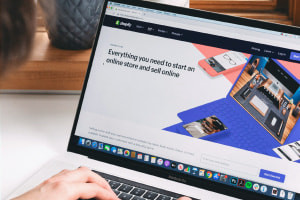 Start here: Shopify Tutorial for Beginners For when you run a Shopify store and need to understand the basics of platform management. Open the free course on Alison ↗
Affiliate links: CHEAPUNO may earn a commission if you buy through them, at no extra cost to you.
Other problems readers raise
How do I check if my store supports UCP for AI agents?
Why does my landing page look clunky and lose users immediately?
Why prospects abandon carts at the final payment step?